
FINTECHPULSE
Thought leadership highlights

Revolutionizing Zakat Collection and Distribution with Strands Islamic …
Zakat, one of the Five Pillars of Islam, is a form of almsgiving treated as a religious obligation...

Empowering Nordic Banks through Open Banking Innovation
Digital Transformation & Open Banking: Strategies for Success in Nordics In the rapidly...

Latin American Banking Digital Transformation
1. IntroductionLatin America's banking sector is undergoing a pivotal transformation. Despite a...

Enhancing CASA Ratios in SouthEast Asia: The Strands strategic approac …
In the dynamic landscape of South East Asia's banking industry, distinguishing oneself amidst...

Innovating Islamic Banking in the Digital Age
As we forge ahead into an era where technology seamlessly integrates with our daily lives, the...

Collaborating with Akbank LAB: Pioneering Fintech Innovation
At Strands, we’ve been at the forefront of fintech innovation for two decades. Our mission? To...

Revolutionizing Banking Through SaaS Innovation: A Dive into Customer …
The banking industry finds itself at a pivotal juncture amidst rapid shifts in consumer...

Strategies For Deposit Acquisition: The Power of Hyper-Personalization …
Across the retail banking industry, the battle for core deposits has reached unprecedented levels,...

Empowering Sustainable Banking: Navigating the Green Financial Landsca …
Financial institutions are at the forefront of a dynamic sustainability landscape as individuals...
CRIF recognized for its open banking value-added services by Forrester
CRIF named as one of the top open banking players in latest analysis from leading global analyst...

Webinar: Digital Growth Via Personalized Experiences with Nanogon
Enhancing user experiences is the key to this new approach’s success retaining customers at the...

Experience at the Global SME Finance Forum Cambodia 2022
Under the “Harnessing Digitalization for Sustainable and Inclusive SME Finance '' claim, the past...
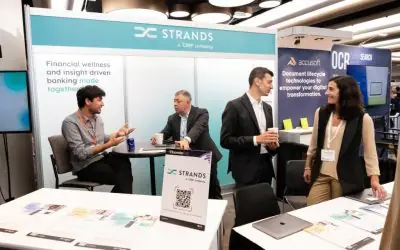
Amazing participation at Finovate Fall 2022
Our first FinovateFall is in the books and what an incredible experience! The event that took...
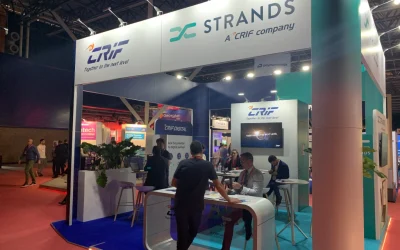
Strands & CRIF Digital Sponsor Money20/20 Europe 2022
The Money 20/20 Europe event is the place where the fintech community moves forward. From global...

Fintech 2022: The Rise of Sustainability in Finance
Sustainability in finance is no exception to global corporate shift that embraces the impact on...

10 Books Every FinTech Professional Should Read
It’s safe to say banking is not the same industry it was a few years ago. If you are working in a...
Latin American Banking Digital Transformation
1. IntroductionLatin America's banking sector is undergoing a pivotal transformation. Despite a...

Enhancing customer engagement through personalized insights
Use case: Vincent, a Gen Z digital nomad How can you enhance Vincent’s engagement with your...

Financial wellness use cases: Increase your retail customers’ en …
Financial wellness as a driver of engagement and adoption in digital banking Benefits of the...

Financial wellness and engagement: How can Fintechs help banks?
Mental health is a lifelong and complex concern that affects how people think, feel, and act. It...

Hyper-Personalization in the Banking Industry: Enhancing Customer Sati …
In today's digital age, customer satisfaction in the banking sector is heavily reliant on...

How can a PFM help you to increase adoption and engagement on your dig …
Table of Contents PFM and Banking Insights tools as enablers of personalization for a greater...

The Opportunities of Financial Inclusion in Latin America
Table of Contents Latin America’s Financial Inclusion in Figures Main Barriers to Financial...

Clearing Up the Myths: The Truth about Open Banking
Table of Contents Data security is at risk with Open Banking It complicates financial processes...

XaaS in Finance: The future banking success
Welcome to the dawn of a new era in the future banking industry, where Everything-as-a-Service...
Revolutionizing Zakat Collection and Distribution with Strands Islamic …
Zakat, one of the Five Pillars of Islam, is a form of almsgiving treated as a religious obligation...
Empowering Nordic Banks through Open Banking Innovation
Digital Transformation & Open Banking: Strategies for Success in Nordics In the rapidly...
Enhancing CASA Ratios in SouthEast Asia: The Strands strategic approac …
In the dynamic landscape of South East Asia's banking industry, distinguishing oneself amidst...
Innovating Islamic Banking in the Digital Age
As we forge ahead into an era where technology seamlessly integrates with our daily lives, the...
Collaborating with Akbank LAB: Pioneering Fintech Innovation
At Strands, we’ve been at the forefront of fintech innovation for two decades. Our mission? To...
Revolutionizing Banking Through SaaS Innovation: A Dive into Customer …
The banking industry finds itself at a pivotal juncture amidst rapid shifts in consumer...
Strategies For Deposit Acquisition: The Power of Hyper-Personalization …
Across the retail banking industry, the battle for core deposits has reached unprecedented levels,...
Empowering Sustainable Banking: Navigating the Green Financial Landsca …
Financial institutions are at the forefront of a dynamic sustainability landscape as individuals...

North American Banks Embrace Tech Transformation: A Confluence of Insi …
Empowering Businesses: Strands' Visionary Solutions UnveiledIntroduction: In the fast-evolving...

Unlocking a New Green Banking Revolution
Sustainable banking is the recent shift towards sustainable finance or green banking, and many...

Open Hub Account Aggregation With New Features
Microservice for account aggregation will be ready within this month Open Hub's new Microservice...

Strands Launches a New Re-Designed Website
Strands has launched a new corporate design website With the re-design of Strands, we wanted to...

3 Drivers of Digital Banking’s Unstoppable Rise
After the Global Financial Crisis of 2007-8, large banks around the world were deemed by...

Why Banking Data Is the Key Differentiator for the Digital Era
In the digital era, many companies are still struggling to transform their business to meet...

When will banking data drive customer success?
The exponential growth of technology is the paradigm that was described by Moore’s Law years ago...

Intelligent Categorization: PFM’s Secret Sauce
“How you spend your money is how you vote on what exists in the world” ― Vicki Robin Nearly every...
Revolutionizing Zakat Collection and Distribution with Strands Islamic …
Zakat, one of the Five Pillars of Islam, is a form of almsgiving treated as a religious obligation...
Empowering Nordic Banks through Open Banking Innovation
Digital Transformation & Open Banking: Strategies for Success in Nordics In the rapidly...
Latin American Banking Digital Transformation
1. IntroductionLatin America's banking sector is undergoing a pivotal transformation. Despite a...
Enhancing CASA Ratios in SouthEast Asia: The Strands strategic approac …
In the dynamic landscape of South East Asia's banking industry, distinguishing oneself amidst...
Innovating Islamic Banking in the Digital Age
As we forge ahead into an era where technology seamlessly integrates with our daily lives, the...
Collaborating with Akbank LAB: Pioneering Fintech Innovation
At Strands, we’ve been at the forefront of fintech innovation for two decades. Our mission? To...
Revolutionizing Banking Through SaaS Innovation: A Dive into Customer …
The banking industry finds itself at a pivotal juncture amidst rapid shifts in consumer...
Strategies For Deposit Acquisition: The Power of Hyper-Personalization …
Across the retail banking industry, the battle for core deposits has reached unprecedented levels,...
Empowering Sustainable Banking: Navigating the Green Financial Landsca …
Financial institutions are at the forefront of a dynamic sustainability landscape as individuals...
